Views: 0 Author: Site Editor Publish Time: 2026-04-17 Origin: Site


Feature | Container Type Generator | Regular Generator |
|---|---|---|
Weather Resistance | Fully protected within a container | Needs extra shelter |
Noise Reduction | Has noise insulation | Louder, may need soundproofing |
Portability | Easy to move with shipping container | Portable, but harder to move far |
You should choose a suitable containerized generator that fits your equipment and how you use it.
Make a list of all devices you want to use in a power outage. This helps you not buy a generator that is too small or too big.
Find out how much power your devices need to run and to start. Make sure your generator can handle the highest starting power so it does not get overloaded.
Use only 80% of the generator’s top wattage. This keeps the generator working well and helps it last longer.
Think about what power you might need later when picking a generator. Plan for new equipment so you do not have to buy another generator soon.
Ask an expert for help if your power needs are hard to figure out. Experts can help you pick the right generator and make sure it is installed safely.
Picking the right containerized generator starts with knowing how much power you need. You have to figure out what you want to keep working if the power goes out. This helps you not buy a containerized generator that is too big or too small.
First, make a list of everything you want to power. Write down things like lights, computers, refrigerators, and air conditioners. Hospitals need backup for important places like operating rooms and emergency rooms. These systems must turn on fast and power everything needed if the main power stops.
Here are steps to help you make your list:
Find all equipment and electrical loads that need backup.
Write down the wattage for each thing. You can look for this on the label or in the manual.
Think about which things you will use at the same time. This helps you know your real power needs.
Tip: Remember to add small devices. Even little things can use a lot of power when added together.
People sometimes make mistakes here. Some forget that some appliances need extra power to start. Others do not think about what they might need later or skip checking every device. Make sure you check everything and think about what you might add in the future.
You need to know two kinds of power for each device: running power and starting power. Running power is what keeps a device working. Starting power is the extra power needed to turn it on. Some things, like refrigerators and air conditioners, need more power to start than to run.
Starting watts show the most power needed to start something. Your containerized generator must handle this.
Running watts show the power needed to keep things working. This tells you how much power your containerized generator must give all the time.
Add up the running power for all the things you want to use at once. Then, find the highest starting power from your list. Add this to your total running power. This is the total power your containerized generator needs.
Note: Make sure your containerized generator can handle both running and starting power. This keeps your equipment safe and stops overloads.
Some things need a lot of power to start. Electric motors, like those in pumps or air conditioners, can use a lot of power at first. If you do not plan for this, your containerized generator might stop working.
Electric things with motors need more power to start.
The power needed to start can be more than your containerized generator can give if you do not count it.
If you ignore this, you can have overloads or system failures.
Always find the thing that needs the most power to start. Make sure your containerized generator can handle it. For example, if your air conditioner needs the most power to start, your containerized generator must give enough power for that.
Tip: A professional can help you check your power needs. They can look at both running and starting power and help you plan for the future. This helps you pick a containerized generator that works now and later.
By making a good list, checking running and starting power, and finding the biggest starting load, you can pick the right containerized generator. This makes sure you have power when you need it.
You need to choose the right size generator to keep your power supply safe and reliable. If you pick a generator that is too small, you risk overloads and equipment damage. If you pick one that is too large, you waste fuel and money. You must look at your total power needs, including running watts and starting watts, before you make a decision.
You should never run your generator at full capacity for long periods. The 80% rule helps you keep your generator working well and lasting longer. This rule means you should only use up to 80% of the generator’s maximum wattage. For example, if your generator has a maximum output of 100,000 watts, you should only use 80,000 watts for your running watts and starting watts combined.
Tip: The 80% rule gives your generator room to handle sudden spikes in power, like when equipment with high starting watts turns on.
Follow these steps to apply the 80% rule:
Add up all your running watts.
Find the highest starting watts from your list.
Add the running watts and the highest starting watts together.
Divide the total by 0.8 to find the minimum generator size you need.
For example, if your total running watts are 40,000 and your highest starting watts are 16,000, your total is 56,000. Divide 56,000 by 0.8. You need a generator with at least 70,000 watts.
This rule protects your generator from overloads. It also helps you avoid problems with voltage drops and keeps your power steady. You will see fewer breakdowns and longer generator life.
You should always think about the future when you choose the right size generator. Your power needs may grow if you add new equipment or expand your building. If you only plan for today, you may need to buy a new generator soon.
A good generator plan includes a margin for future power needs. You can use a table to help you see what to consider:
Factor | Description |
|---|---|
Check your current and future power needs. | |
Customization | Pick a generator that fits your special needs and possible growth. |
Oversizing vs. Undersizing | Oversizing wastes fuel and money. Undersizing causes power problems. |
Plan for more power use to keep your generator reliable and strong. |
You should talk to your team about any plans to add more machines or rooms. Write down the wattage for new equipment. Add these numbers to your running watts and starting watts. This helps you pick a generator size that will not let you down.
Note: If you choose a generator with a little extra wattage, you will not have to worry when you add new devices. You will save money and avoid downtime.
You must balance your generator size. Too much power means wasted energy. Too little power means trouble for your equipment. Careful planning helps you choose the right size generator for now and for the future.
When you pick a generator, you need to think about a few things. These things help you find the best one for your business. They also make sure your generator works well in any situation.
The fuel you choose changes how your generator works. It also changes how much money you spend over time. Each fuel type has good and bad points. Look at the table below to see how fuels are different:
Fuel Type | Pros | Cons |
|---|---|---|
Diesel | Uses less fuel, lasts long, low maintenance | Higher cost, more emissions, can be noisy |
Petrol | Cheaper to buy, easy to start | Uses more fuel, shorter life |
Natural Gas | Clean, low cost, stable prices | Needs gas line, high setup cost |
Propane | Long shelf life, clean burning | Uses more fuel, needs storage tank |
Hydrogen | Very clean, quiet | Expensive, hard to find fuel |
Biodiesel | Renewable, lower emissions | Costly, not always easy to get |
Pick a fuel that fits your power needs and budget. Diesel and natural gas are good for businesses. They work well and do not cost too much to run.
You want a generator that is easy to move and set up. Many business generators come in containers. You can move them by truck, ship, or train. These containers help you set up fast, even in far or busy places.
Pick a generator with plug-and-play parts for quick use.
Make sure the container keeps out rain and rust.
Find models that do not need much work to install.
This helps your generator be ready for power problems or planned jobs.
A good generator keeps your power safe and steady. For business use, you need features that protect people and equipment.
Feature | Description |
|---|---|
Sound Attenuation | Keeps noise low for comfort and safety |
Emergency Stop Button | Lets you stop the generator fast in danger |
Overload Capacity | Handles extra power when needed |
LED Lighting | Helps with safe checks and repairs |
Customization Options | Fits your special commercial needs |
Always check for these features before you buy a business generator.
You need to pick three-phase or single-phase. Three-phase is best for big businesses and heavy machines. It gives steady power and can handle big loads. Single-phase is better for small offices or homes with less power use.
Tip: Most business projects work better with three-phase generators.
You also need to pick between synchronous and asynchronous generators. Synchronous generators work better and can be up to 98% efficient. They need less fixing and give steady power. Asynchronous generators are simpler but waste more energy and need more care.
Pick a synchronous generator if you want the best power and less trouble for your business.
You need a generator to keep your home or office working when the power goes out. Many people use containerized generators as backup when the main power stops. These generators help you keep working and living normally. You can use them for lights, computers, fridges, and other important things. Most new generators for homes and small offices are not very loud. They usually make noise like a normal talk, about 60-70 decibels. This is much quieter than portable generators, which can be very noisy.
Pick a generator that has good soundproofing. Look for models with quiet-test modes or low noise ratings. These features help you follow local noise rules and keep your place quiet. Many cities have noise laws, so a quiet generator helps you avoid trouble with neighbors or the police.
Factories, data centers, and big buildings need strong backup power during outages. You must use a generator that can run big machines and large systems. Industrial generators give high voltage and steady power. They also help you follow safety rules and keep your business open when the power is out. You can use containerized generators to power important systems and control energy use.
Noise is not a big problem in industrial areas, but you should still think about it. If your site is close to homes or works at night, use generators with sound barriers or put them far from busy places. This helps workers feel better and lets you follow any local noise laws.
Remote places often lose power more often. You need a generator that is easy to move and set up. Many containerized generators can be put on trucks and taken to faraway places. You can pick a size from 15 kW to 2500 kW, depending on what you need. Make sure your generator matches the voltage of your equipment to stop problems. Some generators let you change voltage settings, so you can use them in different places.
Consideration | Details |
|---|---|
Transportability | Easy to attach to vehicles for remote delivery |
Size | Choose from 15 kW to 2500 kW based on your power needs |
Voltage Match | Make sure the generator fits your facility’s voltage |
Remote sites may not have strict noise rules, but you should still care about comfort and nature. A quieter generator can help protect animals and make your site nicer for people. If your site is near parks or used for tourism, a quiet generator is a good idea.
Tip: Always check the noise rating before you buy a generator. This helps you choose the best one for your needs and keeps everyone happy during power outages.
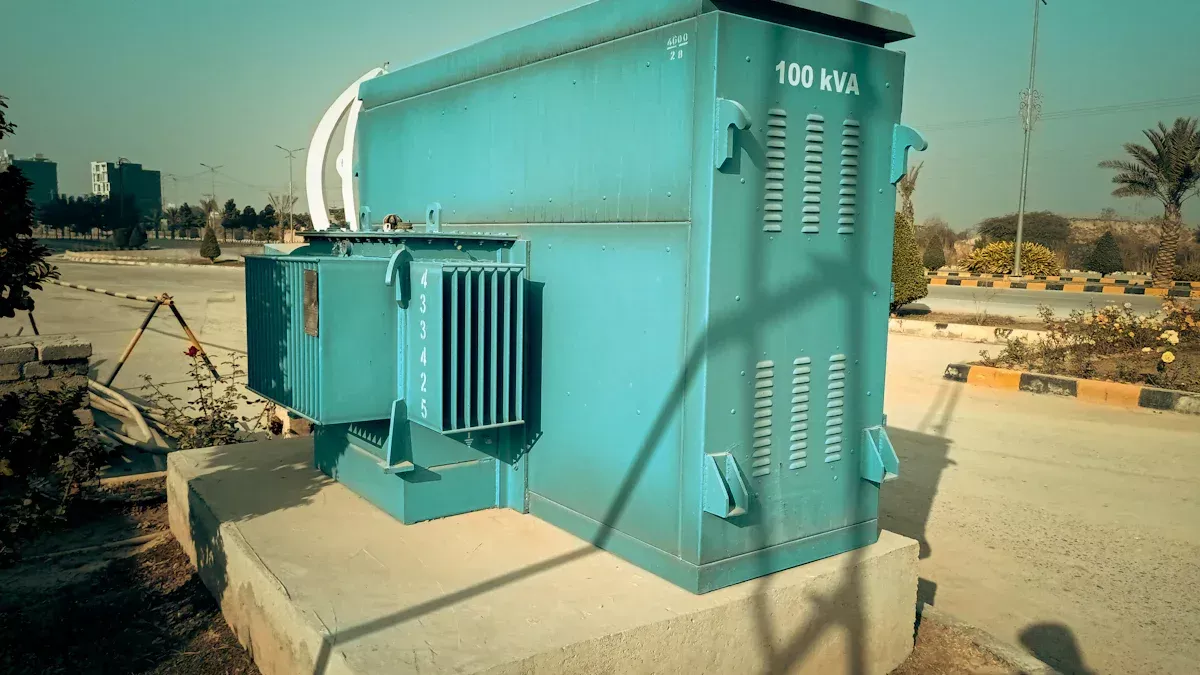
To pick the right containerized generator, follow some easy steps. First, make a list of everything you want to power. Write down each device, like lights and computers. Add any equipment that must work in an emergency. Find out the running watts for each item. If you do not know the watts, use Watts = Volts x Amps to figure it out. For things with motors, like air conditioners or pumps, check the starting watts. These need more power to turn on.
Add all the running watts together. Then, add the highest starting watts to your total. This number shows the smallest generator size you need. If you want to change the number to kilowatts or KVA, use simple math. Doing this helps you know what size generator will work for you.
People can make mistakes when picking a generator. If you choose one too small, it might not work when you need it. If you pick one too big, you waste money and fuel. Forgetting about starting watts can make your generator stop working when you turn on big machines. Not thinking about future needs can leave you without enough power later. Only looking at the biggest load and not the total use can also cause problems. Always check your total wattage and think about what you might need in the future.
Tip: Always check both running and starting watts. This keeps your equipment safe and makes sure your generator is ready for emergencies.
Sometimes you need help from an expert to pick the right containerized generator. Professionals know how to keep generators safe and can help you choose the best size and type for your place. They make sure your home standby generator follows NEC and NFPA rules. They can also help you get your generator installed faster.
Look for certified electricians and people who are part of groups like the Electrical Contractors Association. Here is a table to help you know what to look for:
Qualification/Certification | Description |
|---|---|
Certified Electricians | Specializing in generator installations |
Industry Memberships | Electrical Contractors Association (ECA) |
Ask for help if your power needs are tricky or if you want the best generator for lots of outages. Experts can help you pick a good containerized generator for emergencies. They can also show you how to use your generator safely. They help you find the best generator for rare outages and help you choose the right home standby generator for your building.
Note: Getting advice from a professional helps you avoid mistakes. It also makes sure your generator works when you need it most.
You can choose the best containerized generator for your home by following simple steps. Make a list of what you want to power in your home. Calculate the running and starting power for each device in your home. Apply the 80% rule to keep your home generator safe. Think about future needs for your home. Look at key factors like fuel type, installation, and reliability for your home. If your home has complex power needs, ask a professional. Professionals help your home meet safety rules and keep your home safe. They make sure your home follows regulations. Experts help your home generator work better and avoid failures. Take action to protect your home and keep your home powered during outages.
A containerized generator sits inside a shipping container. It protects from bad weather and keeps noise low. You can move it easily to different places. People use it for homes, offices, or big work sites.
Make a list of everything you want to power. Write down the running watts and starting watts for each device. Use the 80% rule to choose a generator that fits your needs. If you are not sure, ask a professional for help.
Yes, you can use a containerized generator at home. Many models are quiet and safe to use. You get backup power for lights, fridges, and other important things.
Fuel Type | Best For |
|---|---|
Diesel | Businesses, big sites |
Natural Gas | Homes, offices |
Propane | Remote places |
Pick the fuel that works for your needs and your budget.