Views: 0 Author: Site Editor Publish Time: 2025-09-08 Origin: Site


Diesel generators use less fuel and last longer. They are good for long trips and heavy use. Gasoline generators are lighter and easier to find. They work well for short trips and small power needs. Think about how you travel and what power you need. This helps you pick the best generator for your RV trips. Both types need regular care. This stops problems and helps them last longer. Look at the price, fuel cost, and care cost. This helps you choose the right one for your money and travel plans.
When you pick a portable generator for your RV, you have two main options. Diesel generators and gas generators are both popular. Each one has good points and bad points. Diesel generators are great for long trips. They last longer and use less fuel. Gasoline generators are lighter and easy to carry. They are simple to set up and use.
Diesel generators are quiet. They work well in cold weather. You pay more at first, but you save money later. Diesel fuel costs less and lasts longer. Gasoline generators cost less when you buy them. You can find gas almost anywhere. It is easy to fill up. Gas generators need more care. They use more fuel and do not last as long.
If you travel a lot or camp off-grid, diesel generators are strong and reliable. Gasoline generators are better for short trips or small RVs. Pick the generator that fits your camping style.
Tip: Think about how much you use your RV and where you go. This helps you choose between diesel generators and gas generators.
Here is a quick look at how diesel generators and gas generators compare:
Aspect | Diesel Generators | Gas Generators |
|---|---|---|
Performance | More efficient, good for cold, heavy use | Works in many places, smaller, easy to move |
Cost | Costs more to buy, saves money over time | Costs less to buy, uses more fuel |
Maintenance | Needs less care, lasts longer | Needs more care, needs service often |
Diesel generators use less fuel and need less care. Gasoline generators are easy to buy and move. You spend more on fuel and fixing them. Your choice depends on your RV and how you travel.
When you look at diesel generators for your RV, you notice they stand out for their strong fuel economy. Diesel generators give you more power for every gallon of fuel. This means you can run your RV longer without stopping to refuel. Diesel generators also handle heavy loads well. If you use your air conditioner, microwave, or other big appliances, diesel generators keep up without wasting fuel. You do not have to worry much about maintenance, either. Diesel generators do not have carburetors or spark plugs, so you spend less time fixing them. You also get a safer experience because diesel fuel is less flammable than gasoline.
Gas generators work well for many RV owners. Gasoline is easy to find, and gas generators are simple to use. Some gasoline generators, like inverter models, do a good job at lower loads. If you only need to charge your phone or run a small fan, gas generators can save fuel. But when you ask for more power, gas generators use more fuel than diesel generators. You may notice you fill up the tank more often if you use a lot of appliances in your RV. Gasoline generators also need more care. You have to check the carburetor and spark plugs to keep them running well.
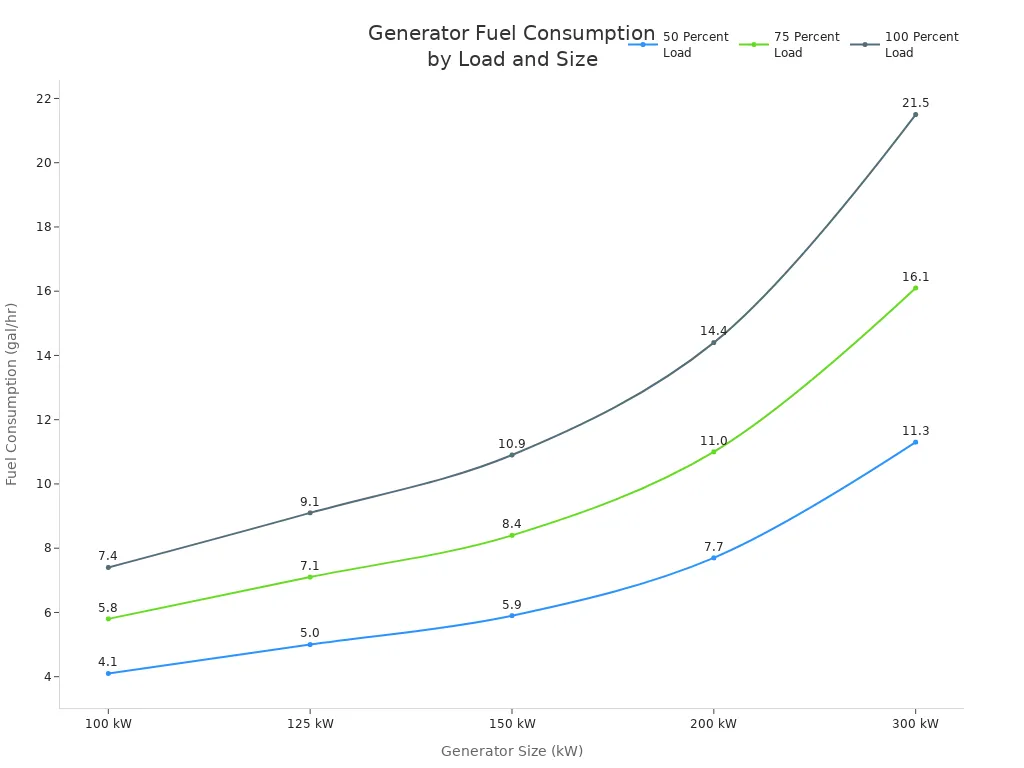
You want to know how these generators work in real life. Diesel generators shine when you travel long distances or camp off-grid. You get more hours of power from each tank. Gas generators are great for short trips or when you do not use much power. Here is a quick look at how much fuel different generators use at different loads:
Generator Size (kW) | 50 Percent Load | 75 Percent Load | 100 Percent Load |
|---|---|---|---|
100 | 4.10 gal/hr | 5.80 gal/hr | 7.40 gal/hr |
125 | 5.00 gal/hr | 7.10 gal/hr | 9.10 gal/hr |
150 | 5.90 gal/hr | 8.40 gal/hr | 10.90 gal/hr |
200 | 7.70 gal/hr | 11.00 gal/hr | 14.40 gal/hr |
300 | 11.30 gal/hr | 16.10 gal/hr | 21.50 gal/hr |
Tip: If you use your RV for big adventures or need lots of power, diesel generators help you save fuel and money over time. For weekend trips or light use, gas generators might be all you need.
When you look for a new generator, prices can be high. Diesel generators usually cost more at first. Some gas generators are expensive too, depending on the model. Here’s a table with some popular choices:
Generator Type | Model | Price |
|---|---|---|
Diesel | Onan Diesel RV Generator 3200 Watts Quiet Diesel Series | $4,166.67 |
Gasoline | Cummins Onan RV 4000 Generator Inverter EVAP | $4,490.39 |
Gasoline | Cummins Onan QG 7.0 EVAP Gasoline RV Generator | $7,672.86 |
You may see that some gas generators cost more than diesel ones. Always look at what each generator can do before you buy. The best generator for your RV depends on what you need and how much you want to spend.
Fuel can get expensive if you travel a lot. Diesel generators use diesel fuel and are better with fuel. You get more power for each gallon. Gasoline generators use gas but need more fuel to run. Over a year, diesel fuel may cost less if you use your generator often.
Feature | Diesel Generators | Gasoline Generators |
|---|---|---|
Fuel Efficiency | Better fuel efficiency | Lower fuel efficiency |
Fuel Tank Capacity | Larger tanks (90-150 gallons) | Smaller tanks (80-100 gallons) |
Overall Cost Implications | Save money over time | Cheaper for light use |
If you camp far from towns or use your generator a lot, diesel generators help you save on fuel. For short trips, gas generators can be cheaper.
Tip: Think about how much you use your generator. Diesel fuel can save you money if you travel often.
Taking care of your generator is important. Diesel generators need service less often, but each visit costs more. Gas generators need more care, but each job is cheaper. You might spend about $2,000 a year to keep a diesel generator working well. For gas generators, it is closer to $1,000 each year.
Maintenance Item | Diesel Cost Estimate | Gasoline Cost Estimate |
|---|---|---|
Estimated Annual Maintenance Cost | ~$2,000+ | ~$1,000+ |
Diesel generators last longer and are good for heavy use. Gas generators are better for light use and cost less to fix each year. If you want a generator that lasts a long time, diesel generators are a good pick for your RV.
You want your RV trips to be easy. Taking care of diesel rv generators is important. Diesel generators need service less often than gasoline ones. You still need to check them sometimes. Look at the oil, air, and fuel filters often. Change the filters when they get dirty. Clean filters help your generator work well and last longer.
Here are some problems you might see with diesel generators:
Trouble starting
Power goes up and down
Filters get dirty or blocked
If your diesel generator will not start, try these steps:
Check the battery and fuel.
Look at ignition wires for rust.
Make sure there is enough fuel and the valve is open.
Check the circuit breakers and reset them if needed.
Checking your diesel rv generators often helps them stay reliable. You can stop big problems by fixing small ones early.
Gasoline generators need more care. You should check the carburetor and spark plugs often. Gasoline can make sticky stuff, so clean these parts. This helps your generator run well. Change the oil and filters on a regular schedule.
Common problems with gasoline generators are:
Hard to start
Power drops
Gets too hot
If your gasoline generator will not start, check the fuel and battery wires. If it runs but does not make power, look at the circuit breakers and voltage regulator. If it gets too hot, check the cooling system and coolant.
Tip: Make a checklist for your RV generator care. This helps you remember what to check and when.
You want a generator you can trust. Diesel generators are better for long-term use. They handle heavy loads and run for many hours. Diesel rv generators last longer than gasoline ones. Gasoline generators work well for short trips. They may need more repairs over time. If you use your RV a lot or travel far, diesel generators give you peace of mind. For light use, gasoline generators can do the job, but you may need to fix them more.
You want your rv to be quiet and calm. Diesel generators can help with this. Many diesel generators are not very loud. If the engine is covered, it is even quieter. You may hear a soft sound, like a fridge or people talking. Most quiet generators make 50 to 60 decibels of noise. This is not too loud. It helps you sleep or relax without loud sounds.
Some diesel generators get noisy if you use them hard. Old models or open-frame types can be very loud. They can reach 100 decibels, like a busy street. If you want less noise, pick a generator with a soundproof cover. You can also build a box around it or put a rubber mat under it. This helps stop shaking and noise. Keep your generator at least 20 feet from your rv. Point the exhaust away from where you sit or sleep.
Tip: A quiet diesel generator lets you enjoy your rv trips. You can sleep well and not get bothered by noise.
Gasoline generators are good for rv owners who want something light. These generators can be loud, especially old open-frame ones. Some gasoline generators can be as loud as 100 decibels. This makes it hard to relax or sleep in your rv.
New gasoline generators have covered engines to make them quieter. Some models run at 50 to 60 decibels. This is much better for comfort. If you want less noise, move your generator farther from your rv. Use a rubber mat to stop shaking. Point the exhaust away from your living space. Pick a generator that fits your power needs. This way, you do not have to use a loud one all the time.
Build a box around your generator.
Put a rubber mat under it to stop shaking.
Keep the generator at least 20 feet from your rv.
Point the exhaust away from where you stay.
A quiet gasoline generator can make your rv feel cozy. You can enjoy camping even when you are far from others.
When you travel in your RV, you want to find fuel easily. Gasoline is simple to get at almost every gas station. You can stop in most towns and fill up fast. Diesel is also easy to find, mostly on highways and at big truck stops. Places like Love’s, Pilot, and Flying J have diesel pumps for you. Many smaller stations now have special truck lanes for diesel. This makes it easier for RV owners to get diesel.
Big truck stops on highways have diesel fuel.
Some regional chains add truck lanes for diesel.
Apps like Open Roads help you find diesel or gasoline stations.
If you plan ahead and use a fuel app, you will always know where to stop. Both fuels are easy to find, but diesel may need more planning in faraway places.
Tip: Always check your route for fuel stops before long trips. This helps you avoid running out of fuel for your RV generator.
Storing fuel for your RV generator needs care. You want to keep your fuel safe and fresh. Always use DOT-approved containers for diesel and gasoline. Store these in a place with good air flow, away from heat or sparks. Check your tanks often for leaks to stop problems.
Fill your tank almost full to stop water from building up.
Use a fuel stabilizer to keep fuel fresh and stop it from going bad.
Store your RV in a cool, covered, and airy spot.
Fuel stabilizers help your generator work better by stopping bad stuff from forming. Add a stabilizer before you store your RV for a long time. This keeps your fuel good for up to 12 months.
Note: Check your generator’s fuel system for leaks or damage often. Safe storage means fewer problems when you travel.
Diesel generators last a long time. You can use them for many years. Most diesel generators run for 10,000 to 30,000 hours. This means you could use one for 20 to 25 years in your rv. You need to take care of it regularly. Diesel engines are strong and tough. They do not break down often. You can drive far and use your rv a lot. Diesel generators do not need big repairs very much. They keep working well on long trips and with heavy loads.
Diesel generators work for 10,000–30,000 hours.
You can use them for 20–25 years in your rv.
Diesel engines need fewer big repairs.
They are good for long trips and heavy loads.
If you travel a lot or go on big adventures, diesel generators help you worry less. You can enjoy your trip more and not think about breakdowns.
Tip: Diesel generators are great for people who travel a lot and want something that lasts a long time.
Gasoline generators do not last as long. Most gasoline generators run for 2,000 to 3,000 hours. If you use your rv for weekends or short trips, a gasoline generator might be enough. These engines wear out faster if you use them a lot. You may need to fix them more often. Gasoline generators need more care and repairs to keep working.
Gasoline generators work for 2,000–3,000 hours.
You get fewer years of use in your rv.
Gasoline engines wear out faster with heavy loads.
You need to fix and check them more often.
If you only travel sometimes or use your rv for short trips, gasoline generators work fine. If you travel a lot or need more power, diesel generators are better.
Note: Diesel generators last longer and are stronger for people who travel often. Gasoline generators are good for light use and short trips.
Safety is very important when you use a generator in your rv. Diesel and gasoline generators can cause fires or explosions, but they are different. Gasoline and propane can explode fast if there is a leak or spark. Diesel fuel does not explode as easily, but it stays on surfaces if spilled. You should clean up any leaks right away to stay safe.
Watch out for these things with rv generators:
Gasoline and propane can catch fire or explode quickly.
Diesel fuel is less risky but can stick around and cause trouble later.
Always fix leaks or spills as soon as you find them.
Use your generator where air can move around well.
Here are the flash points for these fuels:
Propane: -156 °F
Gasoline: -45 °F
Diesel: 140 to 176 °F
Diesel has a higher flash point, so it is safer to store and use in your rv. You still need to be careful with all fuels.
Tip: Check for leaks before you start your generator. Keep fuel in safe containers and away from heat.
You want your rv trips to be safe for you and nature. Generators make pollution that can hurt the air. Diesel generators release nitrogen oxides, tiny particles, and carbon dioxide. These things can make smog and help cause global warming. Gasoline generators also pollute, but diesel engines often make more bad particles.
California has rules for cleaner rv generators. By 2028, new portable generators must be zero-emission. Companies are making new technology to help both diesel and gasoline generators pollute less.
Diesel generators make more nitrogen oxides and particles.
Both types of generators add pollution to the air.
New rules mean cleaner generators will be here soon.
If you want to help the environment, pick a generator that meets new standards. Cleaner generators let you enjoy your rv and protect nature.
If you travel in a small RV, you want rv generators that are quiet, light, and easy to move. You do not need a huge amount of power. You want something that fits in tight spaces and does not make much noise. Here are some great choices for small RVs:
Honda EU2200i: This is one of the best portable rv generators for small RVs. It runs quietly at just 48 dB, so you can sleep or relax without loud sounds. It gives you enough power for lights, a small fridge, or to charge your phone.
WEN 56203i: This model is light, only 39 lbs, and easy to carry. It makes just 51 dB of noise at a low load. It is also budget-friendly, so you do not have to spend a lot to get a good generator.
You can use propane rv generators in small RVs if you want a cleaner fuel option. These are great if you already use propane for cooking or heating. Many small gas rv generators also work well for weekend trips. If you want to keep things simple, look for portable power stations. These are easy to use and do not need fuel.
Tip: For small RVs, pick rv generators that are quiet, light, and easy to store. You do not need a big, heavy generator.
Large RVs need more power. You may have two air conditioners, a microwave, and lots of lights. You want rv generators that can handle all your needs without stopping. Diesel generators work best for big RVs. They last longer, use less fuel, and can run for many hours. You do not have to refuel as often. Diesel rv generators are strong and reliable for long trips.
Gas rv generators cost less at first, but they use more fuel and do not last as long. If you use your RV a lot, diesel is the better choice. For a large RV, you need a generator with at least 5000 to 7000 watts. This gives you enough power for all your appliances.
Propane rv generators can also work in large RVs, especially if you want a cleaner fuel. Some people use dual-fuel models that run on both gasoline and propane. This gives you more options when you travel.
Note: Large RVs need rv generators that are strong, efficient, and built to last. Diesel models are best for heavy use and long trips.
If you love camping far from others, you need rv generators that work well off-grid. You want something that runs quietly, uses fuel wisely, and is easy to move. Inverter generators are a top pick for boondocking. They make clean power for your electronics and run quietly. You can use portable rv generators with parallel capability to connect two units for more power.
Here is a table showing what to look for in rv generators for off-grid use:
Feature | Why It Matters for Off-Grid RVing |
|---|---|
Inverter Generators | Quiet, fuel-efficient, safe for electronics |
Wattage Capacity | Powers all your devices at once |
Parallel Capability | Lets you add more power if needed |
RV-Ready Outlets | Easy to plug in your RV |
Portability | Easy to carry to remote spots |
Noise Level | Keeps you within campground rules |
Runtime | Runs longer without refueling |
Fuel Type | Choose what is easy to find and store |
Many people use propane rv generators for boondocking. Propane is easy to store and lasts a long time. If you already have propane tanks, this is a smart choice. Gasoline is common, but you may run out if you stay off-grid for a long time. Dual-fuel rv generators let you switch between gasoline and propane, so you never run out of power.
Portable power stations are also great for off-grid trips. They are quiet, need no fuel, and are easy to recharge with solar panels.
Gasoline: Easy to find, but you may run out on long trips.
Propane: Good if you have tanks, lasts longer in storage.
Dual-fuel: Lets you use both gasoline and propane for more flexibility.
Tip: For boondocking, pick rv generators that are quiet, fuel-efficient, and easy to move. Propane rv generators and dual-fuel models give you more options.
Cold weather can make it hard to start some rv generators. Diesel generators can be tough to start in the cold because they do not have spark plugs. You may need to warm them up or use special fuel additives. Gasoline and propane rv generators usually start more easily in cold weather. If you camp in the snow, think about how your generator will handle the cold.
Propane rv generators work well in cold weather, but propane can lose pressure if it gets very cold. Keep your tanks full and store them out of the wind. Gas rv generators are a good choice for winter trips because they start quickly. Portable power stations also work in the cold, but their batteries may not last as long.
Diesel generators: Harder to start in cold weather.
Gasoline and propane rv generators: Easier to start when it is cold.
Portable power stations: Work in the cold, but battery life drops.
Note: For winter camping, choose rv generators that start easily in the cold. Gasoline and propane rv generators are good picks for snowy trips.
You want your rv to work well. First, check the space for your generator. Measure the spot where it will go. This helps you pick a size that fits. Next, look at all the things you want to use. Add up the power each one needs. The air conditioner uses the most power. After you add the numbers, add 20% more. This keeps your generator safe and not overworked.
Measure the space for your generator.
Add up the starting power for each appliance, especially the A/C.
Add 20% extra to your total for safety.
Doing this helps your generator last longer and work better.
How you travel changes what generator you need. Some people want quiet nights at campgrounds. Others need power for long trips away from towns. Look at this table to see what features match your trips:
Feature | Description |
|---|---|
Power Output | Make sure the generator’s power matches your rv’s needs. |
Noise Level | Pick a model under 60 decibels for quiet camping. |
Fuel Type | Gasoline, propane, and dual-fuel models give you choices. |
Size and Portability | Think about how heavy it is and if it fits in your rv. |
Runtime | Longer runtimes mean you stop less for fuel. |
Parallel Capability | You can connect two generators for more power if needed. |
Price Point | Pick a generator that fits your budget and travel plans. |
You can find a generator that fits your rv and how you travel.
Choosing a generator can be hard. Here are some tips to help you pick between gasoline and diesel generators:
Feature | Gasoline Generators | |
|---|---|---|
Cost | Cheaper to buy | Costs more at first |
Availability | Easy to find everywhere | Sometimes harder to find |
Weight | Lighter and easier to move | Heavier and harder to lift |
Noise Level | Usually quieter | Can be louder |
Fuel Efficiency | Uses more fuel | Uses less fuel and runs longer |
Lifespan | Does not last as long | Lasts longer and is tougher |
Power Output | Good for small needs | Best for lots of appliances |
Tip: Think about how much you use your rv, your money, and where you go. Gasoline generators are good for short trips. Diesel generators are better for long trips and save fuel.
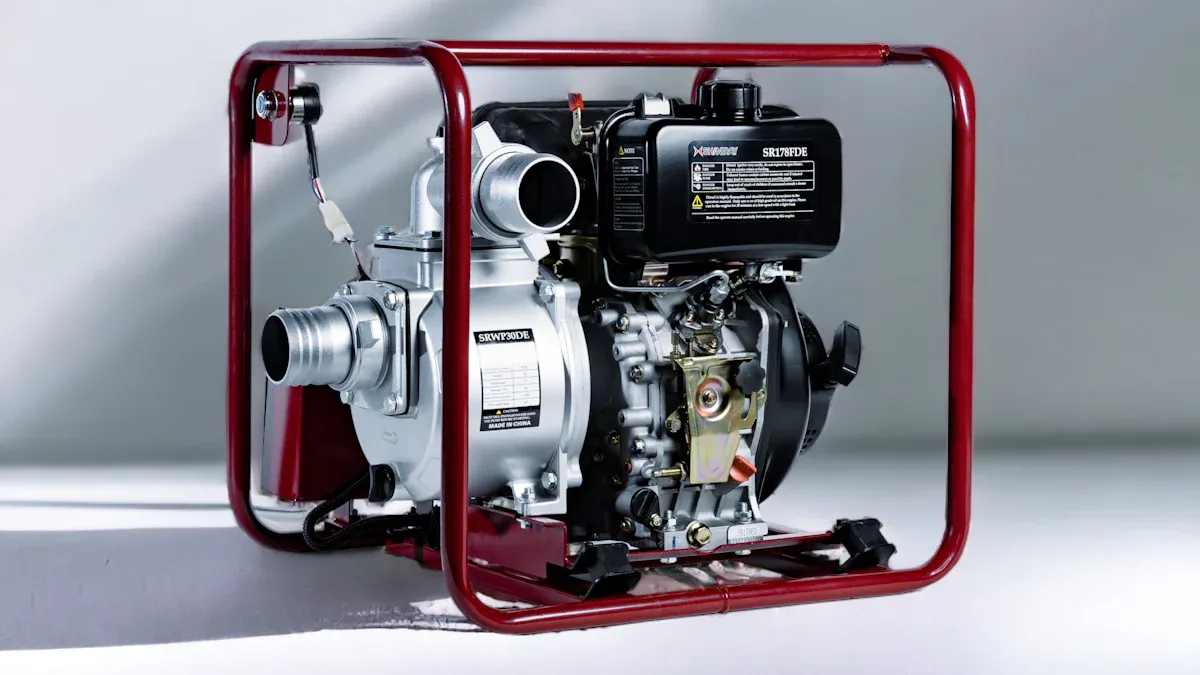
There are many good things about using a portable diesel generator for rv. Diesel powered generators give you more power from each gallon of fuel. You can use your rv longer before you need to add more fuel. These generators last longer than gasoline powered ones. You do not have to fix them as much because diesel engines have fewer parts that break. Diesel fuel stays good for a long time, so you do not worry if your rv sits for months.
Here’s a simple table that shows why diesel powered generators are special:
Advantage | What It Means for You |
|---|---|
Fuel Efficiency | More power per gallon, less refueling |
Extended Run Time | Runs 30-50% longer on the same tank |
Lower Operating Costs | Saves money over time |
Longer Service Intervals | Fewer trips to the mechanic |
Diesel powered generators can work for days or weeks if you care for them.
You will have fewer problems and longer times between repairs.
Diesel fuel is safer to keep and does not catch fire as easily as gasoline.
Tip: If you want a strong generator that lasts many years, a portable diesel generator for rv is a great pick.
You should also think about the bad sides when picking between diesel powered generators and gasoline powered generators. Diesel generators are heavy and hard to move around. They can be louder than some gasoline powered generators, which might bother you or others nearby. These generators cost more to buy, and fixing them can be pricey if something breaks. Diesel powered generators also make emissions like carbon dioxide and nitrogen oxide. These can hurt the air and your health.
Here are some things to remember:
Diesel powered generators need oil changes and checkups often.
The fuel injection system can break and cost a lot to fix.
Diesel generators are big and not easy to carry.
They let out toxins that can harm people, animals, and plants.
The emissions are not good for the environment.
When you look at the good and bad sides of diesel powered generators and gasoline powered generators, you see diesel models are better for saving fuel and lasting longer. Gasoline powered generators are easier to find and move, but they need more care and do not last as long. Think about how you travel and what is most important for your rv trips.
Choosing the right generator for your RV depends on how you travel and what you need. Diesel generators give you more power and last longer, but they cost more. Gasoline generators are cheaper and easy to find, though they do not last as long. Take a look at this table to compare:
Fuel Type | Advantages | Disadvantages |
|---|---|---|
Diesel | Cleaner, more powerful, single fuel source | More expensive |
Gasoline | Cheaper, easy to find | Less safe, shorter lifespan |
Before you decide, ask yourself these questions:
How much power do you use?
What fuel does your RV run on?
Will you camp off-grid or stay at parks?
You can always talk to an expert if you feel unsure. Weigh the pros and cons, then pick the generator that fits your adventures best.
You want a generator that matches your RV’s power needs. Check your appliances and add up their wattage. Choose a model with a little extra power so you never overload it.
Yes, you can run your air conditioner with a portable generator. Make sure the generator has enough wattage. Most RV air conditioners need at least 2,000 to 3,000 watts to start up.
You should check your generator every 100 hours of use or once a year. Change the oil, replace filters, and inspect for leaks. Regular care keeps your generator running strong.
Inverter generators work great for camping. They run quietly and make clean power for electronics. You get less noise and better fuel efficiency, which makes your trips more comfortable.